


Anthrotype: Imprint of a human
'Anthrotype: Imprint of a human' investigates the complexities of designing for a post-human Aotearoa. It interrogates the relationship between myself, a Pākehā designer, and the whenua, through material-based making practices. Each toolkit connects a way of making with a location, through a material found there. Through engaging with introduced materials, this project highlights the impacts of human activity on natural landscapes. These tools unleash potential for creativity and environmental restoration.
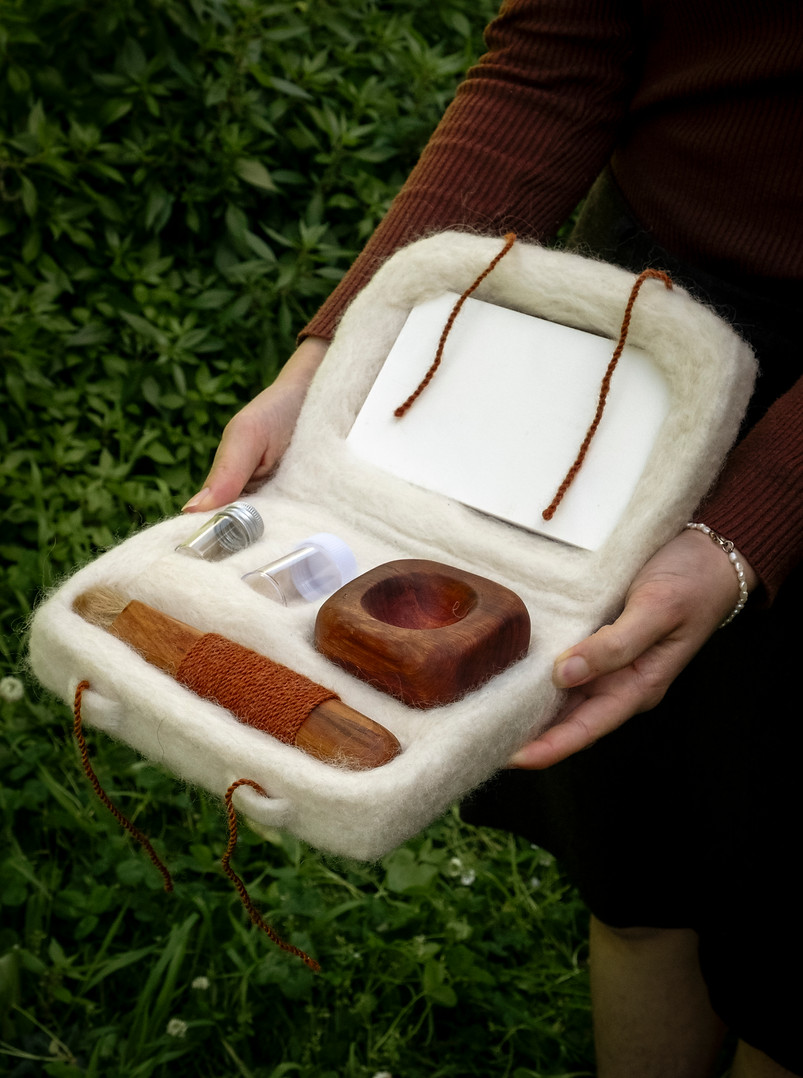
Toolkit for making anthotypes with cotoneaster berries at the Pineapple Track
The first toolkit is designed for the Pineapple Track in Ōtepoti, Dunedin. Through my research I identified the berries of cotoneaster plants which are invasive and prolific in this area as a potential material for creating anthotypes. Anthotypes are sun prints made through a photographic process that uses plant pigments as an emulsion that fades when exposed to sunlight. This kit contains a mortar and pestle, hand-carved from discarded rimu planks, for grinding the berries into a paste. Small containers for alcohol or water are also included to dilute the emulsion along with a small straining cloth for removing seeds etc. The thinner end of the pestle has a brush, for painting onto the paper. The other side of the kit contains the paper, and a sheet of glass cut to the same size and shape for protecting the print while it is exposed.
Toolkit for making anthotypes at Pineapple Track with cotoneaster berries. Model: Marlena Koeninger

Each kit is colour coded with naturally dyed, handspun strong wool yarn and a native bird motif. I chose a korimako (bellbird) for this kit as its unique song can be heard along the Pineapple track. Model: Marlena Koeninger
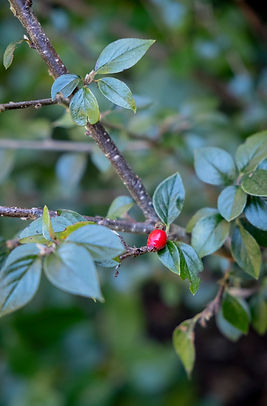
Cotoneaster

Pineapple Track sign

Anthotype being exposed
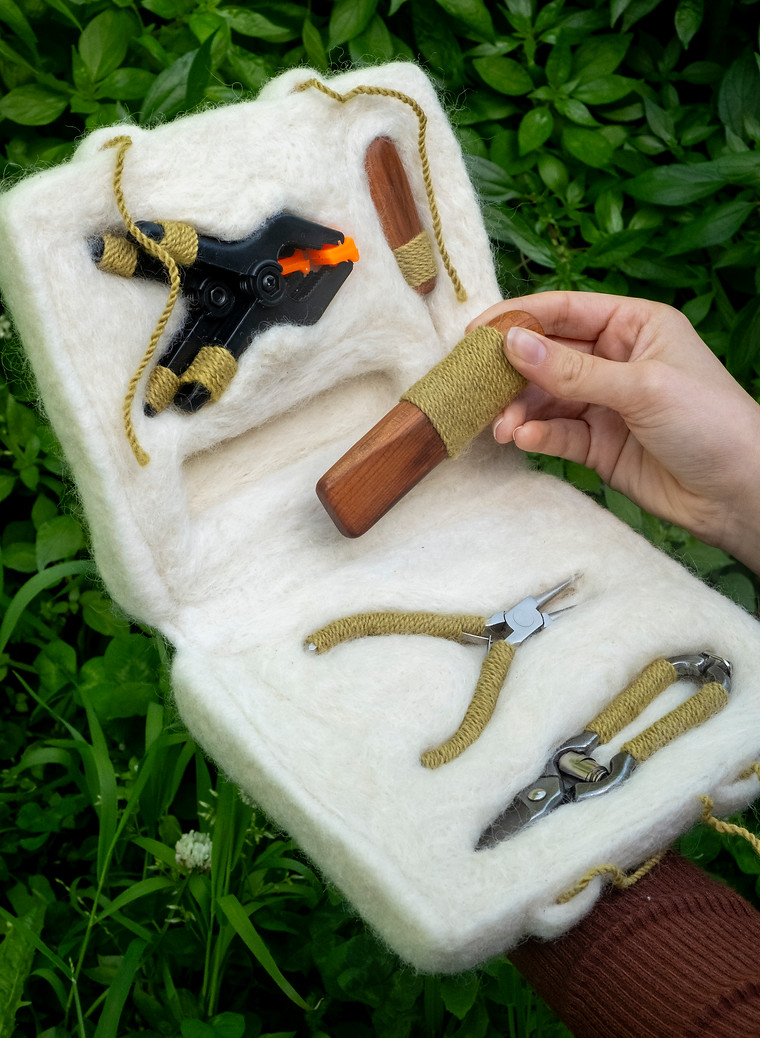
Toolkit for weaving baskets with ivy at Glenside Reserve
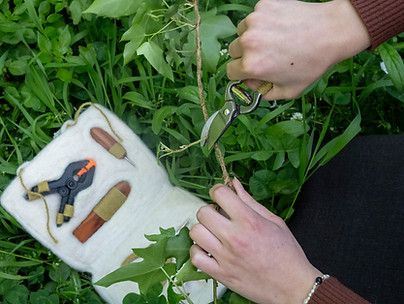
This toolkit proposes another creative use for a different invasive plant, English ivy (aka common ivy). All of the essential tools for crafting a simple basket with ivy vines at Glenside Reserve are included in this kit, and the accompanying guidebook shows how these tools can be used to control the spread of this invasive plant and turn it into something both beautiful and useful.
The natural dye used to create the green yarn and felted bird motif on the front of this kit is also made from ivy, using the leaves stripped from the vines used in my initial experiments with basket-making.
The processes of working with natural materials, such as ivy, strong wool and timber were something I explored in great depth throughout this project. Many of these processes, such as needle felting, natural dyeing, hand-spinning yarn and wood carving take a long time. I found that this slower pace allowed me to preserve more of the natural qualities of the material I worked with, working with them rather than against them.
Toolkit for weaving baskets with ivy at Glenside Reserve. Model: Marlena Koeninger
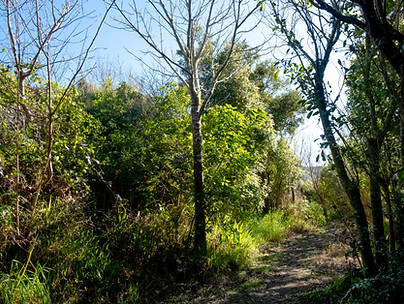
Glenside Reserve loop track
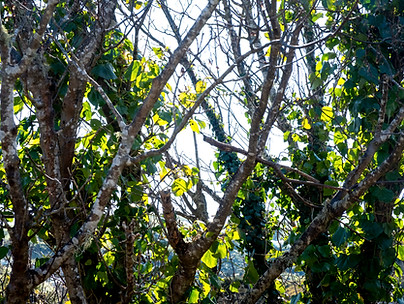
Ivy smothering trees at Glenside Reserve
Toolkit in use
